If you want to break in a leather jacket, the good news is that it takes patience, not tricks. A new jacket can feel stiff across the shoulders and elbows, but the hide softens quickly once it starts moving with your body. This guide gives you seven easy steps to soften leather the safe way and avoid the common mistakes.
Table of Contents
Why a New Leather Jacket Feels Stiff
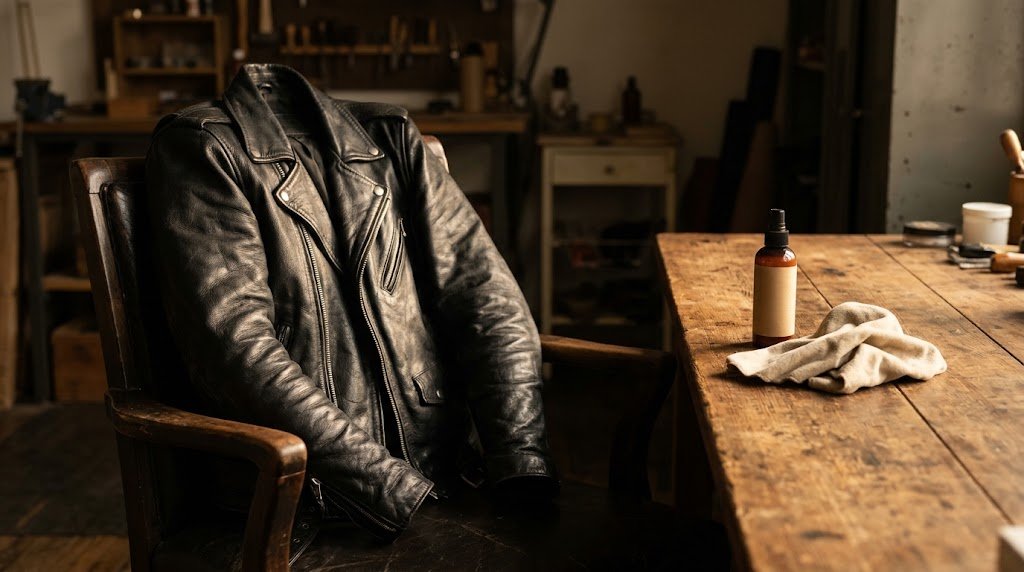
Leather is a natural material, and a new jacket has not yet taken on the shape of your arms, shoulders and back. Thicker hides such as cowhide feel firmer at first than softer lambskin. The stiffness is normal and usually fades in a few weeks of regular wear. Our guide to lambskin vs cowhide leather jackets explains why the two feel so different.
How to Break In a Leather Jacket in 7 Steps
1. Wear it often
The best way to break in a leather jacket is to wear it. Start with short trips, such as a walk or a coffee run, and build up to full days. Your body heat and movement warm the hide and help it relax.
2. Start indoors
Wear the jacket around the house for an hour or two on the first days. Sit, stand, cook and reach for things. Indoor wear lets the leather flex without exposing it to rain or rough weather.
3. Work the stiff areas
Bend your arms, roll your shoulders and flex the elbows with the jacket on. Zip it, unzip it and move the sleeves up and down. Never force the leather or fold it sharply, because creases that are too deep can crack the finish.
4. Use a light leather conditioner
A small amount of a quality leather conditioner keeps the hide supple. Test it on a hidden spot first, apply a thin layer with a soft cloth and let it absorb. More is not better, because too much conditioner can darken the leather and leave it greasy.
5. Use body heat, not a heater
Never use a hairdryer, radiator or hot sun to soften leather. Heat dries the hide and can make it crack. Body warmth is the safest tool you have.
6. Keep it away from soaking rain
Do not try to break in a leather jacket by getting it wet. Water can stain and stiffen the hide as it dries. If your jacket does get damp, hang it on a wide hanger and let it dry at room temperature.
7. Give it time
Most jackets feel much better after a few weeks of regular wear. Thick biker styles can take longer, and soft lambskin jackets often feel comfortable almost at once. Check your fit with our guide to choosing a leather jacket size to be sure stiffness is not a size problem.
Mistakes to Avoid
- Heavy oils and home remedies: they can stain the hide and clog the pores.
- Washing the jacket: water and detergent can ruin the finish.
- Wearing a bag strap in the same spot every day: it can leave a permanent rub mark while the leather is still firm.
- Stuffing it in a bag: creases that are too deep take longer to fade.
How Different Styles Break In
A thick biker jacket takes the longest and ends up with a strong, personal shape. A cafe racer or a trucker softens more quickly, and a lambskin jacket is soft from the start. Browse the vintage motorcycle brown jacket for a style that rewards patience, or the pebbled black leather trucker jacket for a firmer, grained look. Our article on biker jacket vs cafe racer jacket compares the cuts.
Looking After the Jacket Once It Is Soft
When the jacket feels right, protect it. Wipe it with a soft dry cloth, condition it once or twice a year and store it on a wide hanger. Our full leather jacket care guide explains how to keep it looking good for years.
Final Thoughts on How to Break In a Leather Jacket
To break in a leather jacket, wear it often, move in it, condition it lightly and be patient. The jacket will mould to your shape, and each crease will become part of its character. When you are ready for a new one, browse the biker jackets or the full shop.
Common Questions
How long does it take to break in a leather jacket?
Many jackets feel better in two to four weeks of regular wear, but thicker styles may take longer.
Can I soak a leather jacket to soften it?
No. Water can stain and stiffen the leather as it dries.
Is conditioner necessary?
It is not essential at first, but a light coat now and then keeps the hide supple.
Where can I get more help?
Visit our FAQ page or send a message through the contact page.
Leave a Reply