Plenty of jackets are sold as real leather, and not all of them are. Some are plastic with a leather look, some are made from scraps glued together and some are real leather of very different quality. Here are seven simple checks that help you spot a genuine leather jacket before you buy, and a plain explanation of what the labels really mean.
Table of Contents
First, What Does Genuine Leather Mean?
This catches people out. On a label, genuine leather means the material comes from a real hide. It does not say how good that hide is or which part of it was used. The better grades have their own names. Full grain uses the outer layer of the hide with its natural surface left alone. Top grain is also the outer layer, but it is sanded to look more even. Bonded leather is made from leather fibers and scraps held together with a binder, and it usually does not wear well. If you want the basics of the material itself, there is a good page on leather.
7 Checks for a Genuine Leather Jacket
1. Read the label and the product page
Look for the type of leather, not only the word leather. A seller who tells you it is lambskin or cowhide, and whether it is full grain or top grain, is being open with you. A vague line such as real look is a warning sign.
2. Look at the surface
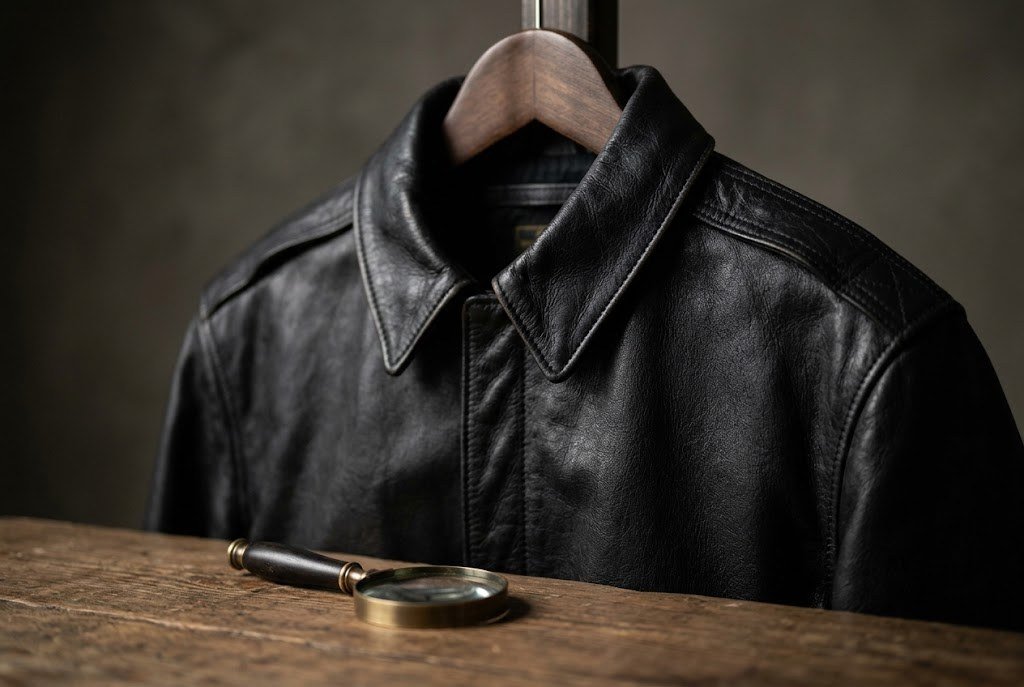
Real leather has small natural marks, tiny pores and slight changes in texture. A surface that is perfectly even and repeats like a pattern is often printed. Some jackets are finished to look smooth, so do not worry about every tiny flaw, but be careful of a surface that looks too perfect.
3. Check the edges
Look at a cut edge, for example inside the cuff or hem. Real leather shows a rough, fibrous edge. A fake often shows a fabric backing or a flat plastic layer.
4. Press it with your finger
Real leather wrinkles and moves a little like skin when you press and release. Plastic tends to stretch evenly and bounce back the same way every time.
5. Smell it
Leather has a natural, earthy smell. A strong chemical or plastic smell is a bad sign. A new jacket can smell a little of the tanning process, but it should still smell like leather.
6. Feel the weight and the warmth
Leather feels cool at first and warms up in your hands. A real hide also has some weight. A very light, thin, slippery feel can mean synthetic material.
7. Look at the price and the seller
A very low price for a full jacket is worth a second look, since real hides cost money to tan and sew. Check the shop too. Clear photos, clear contact details and policy pages show a real business. Ours include our shipping policy and our FAQ page.
Which Leather Should You Pick?
Lambskin is soft and light, and cowhide is tougher and heavier. Our guide to lambskin vs cowhide helps you decide. For example, the quilted lambskin biker jacket is a softer style, while the pebbled black leather trucker jacket is a classic everyday shape. For women, the fitted genuine leather jacket is a good place to look.
Good Leather Needs a Little Care
Even a good jacket looks bad if it is ignored. Hang it on a wide hanger, wipe it with a soft cloth and keep it away from heat. Our leather jacket care guide has the full routine, and how to break in a leather jacket helps if it feels stiff at first. Make sure the fit is right too, with our leather jacket size guide.
Once you know what to check, browse our biker leather jackets and compare the details yourself.
Ready to Shop?
Take your time and use the checks above. When you are ready, browse the full shop, read about leather jacket colors or see the styles in our women’s leather jacket styles guide.
A genuine leather jacket should feel substantial in your hands. Check the weight, the smell and the grain, and look closely at the stitching and the lining. A genuine leather jacket does not need to be flawless, because small marks in the grain are a sign of real hide, not a fault. Ask the seller for the leather type before you buy a genuine leather jacket.
Price can help too. A genuine leather jacket made with care costs more than a thin imitation, and it lasts much longer, so the higher price often works out cheaper in the end. When you compare options, ask yourself which genuine leather jacket you would still be happy to wear in five years, and buy that one.
Quick Questions
Is genuine leather the best quality?
Not necessarily. It only tells you the material is real leather. Full grain and top grain are the grades to look for.
Can I test leather with a flame?
We do not suggest it. It is unsafe and can damage the jacket. The simple checks above are safer.
Does real leather feel stiff?
A new jacket can feel firm, but it softens with wear.
Leave a Reply